The Story of Christianity:
A Trinitarian Hermeneutics
“I had always felt life first as a story: and if there is a story there is a story-teller”- G.K Chesterton (“Orthodoxy”: The Ethics of Elfland)
“And God said, ‘Let there be light’, and there was light” (Genesis 1:3)
"The heavens declare the glory of God; the skies proclaim the work of his hands. Day after day they pour forth speech; night after night they display knowledge"( Psalm 19: 1-2)
"The heavens declare the glory of God; the skies proclaim the work of his hands. Day after day they pour forth speech; night after night they display knowledge"( Psalm 19: 1-2)
“In the beginning was the Word [Logos], and the Word was with God, and the Word was God…Through him all things were made; without him nothing was made that has been made.” (John 1:1- 3)

We all enjoy stories. From the mythical, fantastic, tragic, emotionally moving to the one which causes (as Aristotle coined), catharsis or the purging of fears through the their sublimation unto a protagonist, stories shape everything. From Gossip to The Gospel, I claim the entire spectrum of story-telling not only has it’s culmination in, but its intimate origins, in religion. Rather than reducing religion to only fanciful ‘lies’ which serve as handy sources for aphorism and escape, The Story- like or mythic qualities of religion- in this case, Christianity- make evident why religions exist and why the thirst for the Mysterious, will remain.
The claim that religions are mythical has been popularized by people such as Joseph Campbell and Alan Watts. And within the Christian tradition, there have been three figures in the past century who have communicated eloquently both in their fiction and non-fiction, why Christianity is the greatest Story ever told: G.K Chesterton, J.R.R Tolkien and C.S. Lewis. But rather than dwell at length upon their work and expound their thoughts on the subject- all of their books beautifully address this- I want to sublimate all three of their works and argue how the mythical- aspects of Christianity force us to confront, re-think and transform how we deal with the interpretation of scripture.
Looking at the history of Christian exegesis, historians will argue that what marks the difference between antiquity/the middle-ages and modern exegesis, is the change in emphasis from a anagogical or mystical interpretation of scripture, to a predominantly literal approach. From the early church fathers like Iranaeus, Origen, Augustine and Jerome to Christians during the middle-ages like Albertus Magnus, Bonaventure and Duns Scotus, the church at large as been preoccupied with interpreting scripture esoterically, paying attention to numbers, symbols, enigmatic events and statements, and weaving together complex patterns, which include interpreting strange and seemingly immoral passages in scripture, as veiling deep Truths.
 |
| J. R. R. Tolkien |
Looking at the history of Christian exegesis, historians will argue that what marks the difference between antiquity/the middle-ages and modern exegesis, is the change in emphasis from a anagogical or mystical interpretation of scripture, to a predominantly literal approach. From the early church fathers like Iranaeus, Origen, Augustine and Jerome to Christians during the middle-ages like Albertus Magnus, Bonaventure and Duns Scotus, the church at large as been preoccupied with interpreting scripture esoterically, paying attention to numbers, symbols, enigmatic events and statements, and weaving together complex patterns, which include interpreting strange and seemingly immoral passages in scripture, as veiling deep Truths.

But then came the, ‘Enlightenment’ where from the Protestant Reformation came Luther’s dictum that the only authority that was legitimate for leading our lives, was the bible. This lead to not only a vast amount of translations of The Bible into vernacular tongues, but a vast shift in focus upon what The Bible had to say concerning God’s message to us. From the infamous German Kantian, Friedrich Schleiermacher, Rudolph Bultmann, Wilhelm Dilthey and many others, religion became reduced to mere human sentimentally and literal/linear historical progressions. This has as a matter of fact, influenced both Catholics and Orthodox Christians, not to mention people of different religions or none who, when studying religion either at seminar or at the university level, are injected with the poison of learning about the history of religious people, instead of learning about what religion Is and each religions vast philosophical and theological issues.
I can list the hundreds of disciplines- sociology, history, anthropology, linguistics, art history, etc- which have made their mark on religion, but which have as a result, covered up religion from what it really is. But, rather than simply throwing the tax collectors out of the temple, let's entertain them: more to it, let’s instead of destroying their idols, transmutate them, burning away the outward dross of literal- historical reductionism in order to reveal the Gold of Wisdom which lies beneath it
Before we dive into what this Gold entails and how this connects itself to our prior discussion of the mythological elements of Christianity, I want to make an apology: I do not buy into these historical generalizations. Any careful person will notice how there are exceptions when it comes reducing antiquity and the middle-ages to a vast esoteric project- Jerome was one who definitely stuck to the letter- and there are many fascinating theologians in the past century like Fr. Robert Barron, Hans Urn von Balthasar and others, who have offered many esoterically satisfying interpretations of scripture. This is not even to mention the uniqueness of figures such as Jacob Boehem and Emmanuel Swedenborg in the Protestant world who have beautifully Excavated the Holy Soil of The Bible and uncovered many profound Treasures. But to put it as James S. Cutsinger does when describing S. T Coleridge’s thoughts on materialism, “No, the materialist with which Coleridge wrestles exists at a much more fundamental level, untouched by the liberationist challenges of our time. It exists wherever there is the belief that surfaces and their resistances to one another are irreducible facts and wherever thinking and acting are predicated upon this belief” (The Form of Transformed Vision, 57). In other words, the tendency to believe that all that reality is, concerns linear- historical causation and the so-called ‘external’ sensory world, is all too common for us Fallen creatures. And this also makes the case for why esoterists will continue to emerge, regardless of outside influences.
By refusing to think that the Protestant Reformation and modernity as a whole is the sole explanation for what exegetical writings tend to be filled with these days, we can look at the history of exegesis not only more fairly, but to look at history itself with a Vision which is Transformed. Journey with me reader into this transmutation of literalism, this dialectical dance between the literal and the mythical and discover This Hidden Treasure which as The Holy Koran puts it, is visible “… for a people who reflect”( Sura 16: 69) and for those who as Jesus says, are “pure in heart”( Matthew 5:8).

Towards a Trinitarian Hermeneutics
What will follow will be, rather than a ‘new’ hermeneutic or a new method of interpreting scripture, an extension of our scriptural vision. It will get us to use The Bible as a Symbolic Map of the world around us and as a mirror which reflects all levels of being from The Intellect, the soul, the body, our society and the cosmos. But in order to do that, let’s contemplate the words of the three Christian writers I mentioned above, who will serve us as guides to understanding and recognizing the mythical tones of Christianity.
C.S. Lewis said, “By [Christianity/Christ] becoming fact it does not cease to be myth: that is the miracle” (Myth Became Fact, 141). Saint Augustine has already mentioned a long time ago that Christianity had its precedence in other religious traditions in antiquity, but rather than Christianity being just a fulfillment of past dying and rising gods like Bacchus, Osiris, Apollo, Adonis, Horus and others, it was a Story that in fact incarnated itself in history and still lives and breathes with us. J.R.R Tolkien, had a similar thing to say about this: in the Gospel story, “Art has been verified. God is Lord, of angels, and of men- and of elves. Legend and History have met and fused” (On Fairy- Stories, 63). According to Tolkien, reducing myth to mere human fancies, arbitrary abstractions and dreadful wish-fulfillments, “Would seem to be the truth upside down”( On Fairy- Stories, 7). Rather, these eternal Stories are what give life to what the great western authority on Islamic philosophy Henri Corbin would call the mundus imaginalis/archetypus. Not the lowly ego-generated imagination, but that Placeless- Place wherein contains Plato’s Ideas in a more refined state: The archetypes upon which this world is based on and which Descend from what we Christians would call, the Logos.

This eternal, Imaginal Realm is a faculty within the human being as well as a Realm in its own regard, which allows us- with the grace of God- to access that which both clothes this visible world with its manifold forms, and where The Gospel Myth continues to fill the souls of humans, stars and birds with its eternal Blood and Bread. Rather than just being done and finished with, it still continues and echoes: “Jesus did many other things as well. If every one of them were written down, I suppose that even the whole world would not have room for the books that would be written” (John 21: 25).
If I may share with you a quote from probably the greatest writer the Christian tradition has ever had- G.K Chesterton- I’m confident that this will bring all the threads we’ve discussed and bring us to the work of Hans Urn von Balthasar. Let’s let our master wit speak:
“It is possible that God says every morning, ‘do it again’ to the sun; and every evening, ‘do it again’ to the moon. It may not be automatic necessity that makes all daises alike; it may be that God makes every daisy separately, but he has never got tired of making them. It may be that He has the eternal appetite of infancy; for we have sinned and grown old, and our Father is younger than we. The repetition in Nature may not be a mere recurrence; It may be a theatrical ENCORE…at the end of every human drama man is called again and again before the curtain” (Orthodoxy; The Ethics of Elfland).

The 20th century Catholic thinker, Hans Urs von Balthasar, presents us with amazing ideas and a unique perspective of scripture in his multi-volume work, “The Theo- Drama”. In it, he asserts that the life that Christians are called to live in, is the God- Drama: The Play of life itself, full of meaning, symbolism and pattern. Giving a theatrical interpretation of the holy trinity, The Father is the Author of this Play, The Son the Actor and The Holy Spirit the Director. We humans are called to live this play by becoming co-actors with The Son. It is through the work of the Holy Spirit and the Grace of The Father that we may- with Gods grace- become True Persons by, to and with Christ. As a result, we transcend our restless split between ego and role. Modern society classically conditions us to fit into their cookie-cutter roles and we are handed Satanic masks of Deceit through which we hide behind of. But once we have shed these false masks and taken on Christ’s Body and Blood, The Hidden Mask reveals itself, spotless of sin: The Mask Whose Faceless-Face Hides beneath. Our own True Self: Christ/God.

The breathtaking consequences of such a view of life, adds light to why indeed Christianity- and all religions- care so much about the past and the miraculous events that took place. It is not because we are, ‘stuck in the middle-ages’ nor that we reduce scripture to history, but that we believe history has meaning beyond matter. Events themselves are past Entrances of The Divine into our finite and sinful world and which reverberate and echoe throughout all of our actions and environments. It is why holidays are celebrated, sermons are given, feasts commemorate the lives of the saints and why weekly communion occurs:
“In imitating the exemplar acts of a god or a mythic hero, or simply by recounting their adventures, the man of archaic society, detaches himself from profane time and magically re-enters the Great Time, the sacred time”( Mircea Eliade: ”Myths, Dreams and Mysteries”). But of course, despite modernity’s attempts to silence our hunger for the Sacred, the Great Time lives in those whose Hearts are Pure.

Balthasar is absolutely correct to see our spiritual lives as a drama whose script comes from The Bible. But let’s expand our vision even further: the play we live in is what Richard Wagner, the great German Romanticist composer, called a Gesamkunstwerk or a “total work of art”. This “total work of art” includes within the play, all the arts from music, dance, poetry, myth, architecture, moving painting, and moving sculpture.
If I may push this Truth further, we are all the Shakespearian soliloquies of God’s Speech, His rambling: He is diverging from His Essential Root through Illusiory Rants. And through this dramatic outpour of rambling, comes forth out of His Logos [Word], Creation in all of its dynamic and complex parts which lives, breathes, dies and sings. We are living in what the Hindu’s would call the lila of maya or the Play of Creative Illusion: and we are all the Persona/Mask of God. Nay, we are both the Mask and the Hidden Faceless-Face. And if we are willing to follows Hans Urn von Balthasar’s advice and find our True Self in Christ/The Logos, we may too realize, “All the world's a stage, And all the men and women merely players…”( William Shakespeare, “As You Like It”).
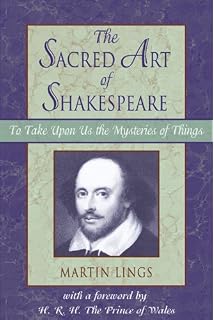
So now that we have jumped from myth to drama, we can now understand one of the biblical quotations I started with as a epigraph: “In the beginning was the Word [Logos], and the Word was with God, and the Word was God…Through him all things were made; without him nothing was made that has been made.” (John 1:1- 3). What this points to along with the beginning of Genesis is that God has spoken- and continues to speak, mind you- creation into being. As a result of this, we are surrounded with what the great St. Maximus The Confessor called an indefinite amount of logoi or microcosmic incarnations of The Logos which Precipitate from Heaven. The cosmos, is God’s speech.
Now, if Creation is a constant display of God’s Speech, can we listen to it and in a sense, read it? Absolutely and in fact, this is what makes all the religions emanations from the same Source: since Creation through speech is present not just in Judaism as well as in Islam- “Our word for a thing, when we intend it, is only that we say to it, Be; and it is”(Sura 16: 40)- and in Taoism- “The nameless is the origin of heaven and earth, while the naming is the origin of the myriad (many) things” ( Tao Te Ching, 1)- Creation is in indeed a Text in itself which when we read, bring us to The Author of all the world religions.
Creation, is a Book: The Bible made manifest. In fact, the great St. Clement of Alexandria with Pure Esoteric insight, claimed that the Creation of the cosmos was the first crucifixion of Christ: it was the Cosmic Crucifixion of The Logos. The Six Days of Creation occurred in 6 terrestrial directions( north, south, east, west, forward and backwards; making a 3-dimensional Cross) which emanated out of the Divine Direction: The Holy Center or The Seventh Day upon which God rested as well as, that Dayless-Day which preceded the first Day of Creation( Stromata 6, 16). The Creation of the world was- and Is, since these 6 days of Creation are Cosmically celebrated/echoed in the procession of time- itself an act of Selflessness, Sacrifice and Love.

And if this Book of Creation is made from the Logos [Word] and if Jesus is according to Christians, the incarnation of The Logos…then Jesus Himself was and Is a Book. And when we partake of The Eternal Bread of His Body and The Eternal Wine of His Blood- and be “crucified with Christ” (Galatians 2:20) - we may ourselves, by becoming co-actors with Christ… become Books ourselves. God’s Word- by his grace- can be Spoken through our words and our actions. But nay, since Christ is the New Adam or the regenrated Image of God within us... there is no such thing as becoming what we already are: we already are this Book.
And if this Book of Creation is made from the Logos [Word] and if Jesus is according to Christians, the incarnation of The Logos…then Jesus Himself was and Is a Book. And when we partake of The Eternal Bread of His Body and The Eternal Wine of His Blood- and be “crucified with Christ” (Galatians 2:20) - we may ourselves, by becoming co-actors with Christ… become Books ourselves. God’s Word- by his grace- can be Spoken through our words and our actions. But nay, since Christ is the New Adam or the regenrated Image of God within us... there is no such thing as becoming what we already are: we already are this Book.
This, my readers, is the Hidden Gold, beneath the sinful veil of historical reductionism, the Trinitarian hermeneutic, which consists of three ultimate Books which mirror and reflect The Inspired Book (The physical Bible in-spirited through all the human writers of the 66 books): the Cosmos, the Human Being and God. Why is God referred to as a Book? Well, he’s not a Book in our physical and material sense of the word: He is a Book without leaves and a Word without mouth. According to The Beloved John, “…and The Word was God” (John 1:1).
And to prove that we are not the only Christians who have discovered this:
“The Father speaks the Son with the whole of His power and speaks all things in Him. All Creatures are the utterance of God”- Meister Eckhart (German Sermon 5).

“They asked the Lover: ‘What is the world?’. He answered: ‘It is a book for such as can read, in which is revealed my Beloved”- Ramon Lull (The Book of the Lover and the Beloved, section 288)
“Always and in everything, God the Word [Logos] seeks to work the mystery of His incarnation”- St. Maximus the Confessor (On the Cosmic Mystery of Jesus Christ, Ambiguum 7)
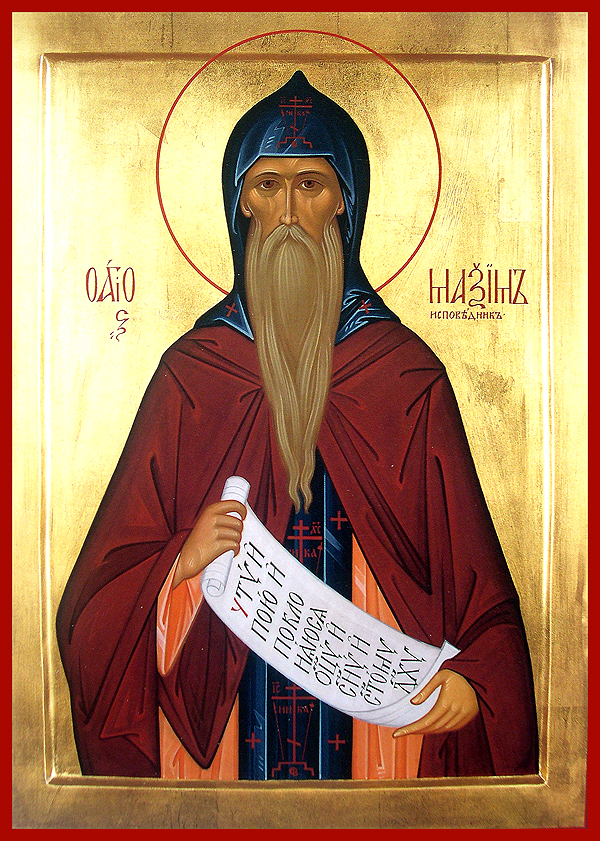 |
| St. Maximus The Confessor |
‘In the depths I saw ingathered, bound by love in one single volume, that which is dispersed in leaves throughout the universe: substances and accidents and their relations, as though fused together in such a way that what I tell is but a simple light”- Dante( The Divine Comedy, Paradiso)
“…the world is itself a ladder for ascending to God, we find here certain traces (from his hand), certain images, some corporeal, some spiritual…some outside (through a mirror) some inside (in a mirror).” - St. Bonaventura (“The Mind’s Road to God”)
“Thus in all things… is seen the glory and praise of My Name”- The Dialogue of St. Catherine of Siena
 |
| St. Catherine of Siena |
“…From this Word are all things and of Him all things speak- the Beginning Who also speaks to us. Without this Word no man understands or judges aright. He to whom it becomes everything, who traces all things to it and who sees all things in it, may ease his heart and remain in peace with God” - Thomas a’ Kempis (Imitation of Christ; The doctrine of truth, chapter 3)
“If your heart were right, then every created thing would be a mirror of life for you and a book of holy teaching, for there is no creature so small and worthless that it does not show forth the goodness of God”- Thomas a’ Kempis ( The Imitation of Christ; The interior life).

“My book is the nature of creation; therein, I read the works of God”- St. Anthony of Egypt (3rd- 4th century)
“…thou shouldst seek all thy rest in me, shouldst willingly suffer wrong from others, desire contempt, mortify thy passions, and die to all thy lusts. Such is the first lesson in the school of wisdom, which is to be read in the open, distended book of my crucified body”- Henry Suso (“Little Book of Eternal Wisdom”- Part 1, Chapter 3)
 |
| Henry Suso |
Those who have God within them, “passes through the holy scriptures” and no longer needed to read those books, for such a person, “himself becomes a divinely inspired book for others”- St. Symeon The New Theologian ( “The Practical and Theological Chapters and Three Theological Discourses”- Forth Ethical Discourse)
The Three Books
These three Books- the cosmos, man and God- are all interconnected with each other and within themselves can be subdivided into many pages. But to get more direct about how we may read these books, let’s deal with the Logos and its multi-various emanating logoi.
According to St. Maximus the Confessor: “It is as though they (the logoi) were drawn to an all-powerful center that had built into it the beginnings of the lines that go out from it and that gathers them together”( On the Cosmic Mystery of Jesus Christ, Ambiguum 7).These particular logoi which participate in the Logos are the Platonic Ideas which dwell in the Pure Mind/Nous of God in their purest geometrical forms, in what we earlier termed as the mundus imaginalis/archetypus, and which clothe themselves in the fabric of matter in our corporeal reality. But what exactly are these logoi? To answer that, we’ll turn next to perhaps the greatest Christian metaphysician, the 5th- 6th century neo-Platonic philosopher, St. Dionysius the Areopagite.

In one of his most famous books, “On the Divine Names”, St. Dionysius gives a comprehensive list of Divine Names for God which are mentioned in both the Old and New Testament. These are further branched into 3 categories: 1) Names of It – the uncommunicable Essence (I am that I am, I am the Life, the Light, the Truth, etc), 2) Intelligible Names ( Good, Wise, Beloved, Wisdom, Salvation, Ancient of Days, Giver of Life, King of Kings, etc) and 3) Prophetic Names- seen through the visions of the prophets( Eyes, Ears, Hair, Wings, Back, Cup, Crown, Throne, etc.) All together, he mentions around 56 Divine Names. But here is where it gets interesting:
“…the Universal and Transcendent Cause must both be nameless and possess the names of all things in order that It may truly be an universal Dominion, the Center of creation on which all things depend, as on their Cause and Origin and Goal… and that… It may be all in all…It contains all things beforehand within Itself, after a simple and uncircumscribed manner through the perfect excellence of Its one and all creative Providence and thus we draw from the whole creation Its appropriate Praises and Its Names”(On The Divine Names). What are the, “Names of all things”? They are the uncountable amount of logoi which fill this physical world: God’s Names- or as the Jewish kabbalists and Muslim esotericists would put it, God’s Attributes/Characteristics- are spread all throughout creation. And yet, this is not only a Book we read in silence and nor is it silent towards us. What would centuries later be called The Music of The Spheres, has direct relevance. If the Angels sing the praises of God and we do as well in church…everything in Creation praises and sings God’s Names. The Stage of Creation is not a silent one. All of our voices come together and have their harmony: there is a Unity in all of our Verses (the real meaning of the word Uni-verse).
Does the human being still have a privileged stance in creation though? Which Name or Praise does Man symbolize? Well, more than you can imagine! A look at Genesis will make it clear that, it was not creation that was made in God’s image, but that only Humanity was made in His Image( Genesis 1: 27). And if every created thing represents in its distinctness from others physical objects, a particular Logoi/Platonic Idea/Divine Name and yet wasn’t made in the image of God…Man contains all of the Divine Names which are spread in the Uni-Verse, just as much as God does.
If we lived in the European Middle-ages or during the Renaissance, we would be familiar with the perspective that humans had of their place on The Great Chain of Being. The word chain in its original Latin schale would more accurately be translated as, "ladder" and, it is in fact where we get the word Scale in music theory for a sequence on notes in a particular key. Connecting this with The Music of The Spheres, all of reality is made up of various levels of interreflectiveness, interconnectedness and interdependence. The levels are as follows:
1. God: Existence, Life, Will(movement), Intellect, Immortality, Omniscience, Omnipotence, Omni- etc.(all earthly and human powers in their Archetypal Purity)
2. Angels: Existence, Life, Will(movement), Intellect and Immortality
3. Humanity: Existence, Life, Will(movement) and Intellect
4. Animals: Existence, Life and Will(movement
5. Plants: Existence and Life
6. Matter: Existence
7. Nothingness(No-Thingness; Chaos)
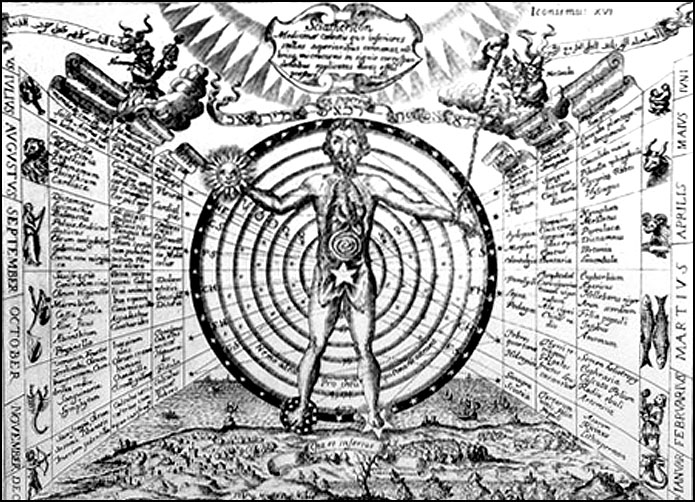
Humans are at the center and therefore, have aspects of what is Below as well as what is Above. But of course we should not take the words Above and Below literally- nor should we think that they were attempting to catalogue everything on earth. Above is another word for Subtle and Below for Manifest and, to make it clear, this is not a horizontal photograph of Creation: it is Vertical Symbol of Harmony. And part of what makes The Great Chain of Being both controversial and interesting, is how this holistic, interconnected and mirroring of the levels of being, entails specific things about how society should be ordered.

We have been on a very long journey: mythology, drama, cosmology, anthropology, music and it’s culmination is in our discovery of these Three Books. How does the life that we live individually as well as collectively, contribute towards deepening into The Bible as a Living and continuing Story? In our Play of the Theo-drama, how exactly do we navigate our way on the stage? How do we read the symbols/masks/Names Below and Above?
The Hermeneutics of Cosmology,
Anthropology and Theology
As a result of having three Books from which to read God’s Word, we have three different branches of hermeneutics: a Trinitarian one. They diverge not in method, but only in level and yet, they are completely inseparable from one other, just as much as each person of the trinity is inseparable from God. And because this blog has been attempting to build the necessary bridge from which to cross from Story to Reality, now we must explain the tools that must be used to interpret these interconnected books.
As mentioned in the beginning, this is not about throwing away the literal interpretations: if one has retained the ideas we’ve discussed above, you’ll know by now that the reason why any sane person would ever interpret something symbolic in scripture literally, would be because ‘external’ reality is not literal/material: Reality is symbolic. And so by having the symbolic in scripture being interpreted literally because of the symbolic nature of the cosmos, this dialectical dance and reciprocal mirroring between them causes the Resurrection of Truth.

What makes the modern world different- even though exceptions exist- when it comes to interpreting scripture, is the usage of what is called the historical- critical method. It is an umbrella term for a multi-disciplinary approach to the Bible which arose after the protestant reformation, looking at scripture as an historical text. The bible came under heavy scrutiny both by ultra-conservatives on the one hand and ultra-liberal humanists on the other. Both sides are two sides of the same disease: historical/material reductionism. But there are a number of things which I feel will get us off our sluggish feet and allow us to make the journey from Story to Reality.

If there is any advantage to making categories for the different genera’s in the bible- from wisdom literature, poetry, letters, historical/quasi-historical narratives- it would be to see not only how they can all be reflected in one another, but suggest how literary the entire bible is. I would be very excited to talk about linguistics, different literary devices used in scripture, as well as applying theories from literary criticism( structuralism, deconstructionism, reader response, gender studies, etc) if we knew how to apply it to the Three Books of the Cosmos, Man and God, not to just the physical book.
Another thing I think is positive about looking at religions historically as well as sociologically- within degree- has everything to do with applying the Bible to those Three books: what would sociologists like Emile Durkheim, Max Weber and others have to say with the ability to interpret humans, the cosmos and God, as a text? If the Grand Chain/Scale/Ladder of Being is true, how do societies interact with these Three Books and vice-versa? To give a sense of direction for where it can go, here’s a passage from Thomas A Tweed’s fascinating book, “Crossing and Dwelling”: “Religions are confluences of organic- cultural flows that intensify joy and confront suffering by drawing on human and surprahuman forces to make homes and cross boundaries” (54).
This is an exciting definition of religion: it is holistic. How do words in those Three Books influence the particular geographical flavors of Christianity in such a way that God’s Word passes on from one Human to the next, one Place in the Cosmos- or society- to the Next and from one of God’s Divine Names to its various copies in the physical world? Such questions allow us to use the Historical Critical Method not just for talking about the history of The Bible, but about how the bible continues to make history at the individual and collective level, with all of its symbolic consequences evident .
This is an exciting definition of religion: it is holistic. How do words in those Three Books influence the particular geographical flavors of Christianity in such a way that God’s Word passes on from one Human to the next, one Place in the Cosmos- or society- to the Next and from one of God’s Divine Names to its various copies in the physical world? Such questions allow us to use the Historical Critical Method not just for talking about the history of The Bible, but about how the bible continues to make history at the individual and collective level, with all of its symbolic consequences evident .

Plus, how else can we approach the sociology of religion? Taking Plato and the great Muslim Philosopher Ibn Arabi, not only can we say within The Grand Chain/Ladder of Being there is an holistic and reflective structure, but if as we concluded earlier, the human beings contains all the Divine Names which are spread thoughout creation, the human being itself contains a microcosm of society. How the human being functions in its many metaphysical layers and faculties, should reflect itself in the macrocosm of society, or else, there will be inner and outer chaos.

Christianity needs to realize that its religion is inseparably connected with Judaism. If there were no Adam and Eve, Moses, David, Solomon and the many Hebrew prophets seeing the coming of The Lord, there would be no Christianity. It isn’t just an historical statement: it is a theological one in essence. Going deep into Jewish theology and mysticism will allow our Old Testament, not only be seen as a prediction of Christ, but as Chuck Missler argued, as a pattern which opens up the entire Bible in its symbolic and mythical richness. And part of what this shift towards Judaism implies, is using the teachings of the Kabbalah.
As Seyyed Hossein Nasr points out, there have been many Christians in the past who have appreciatively borrowed lessons from The Kabbalah: “This particular situation can be explained through the special relation of Christianity and Judaism and the fact that Christianity does not possess a sacred language of its own. This case, therefore, does not invalidate the general principle that the traditional sciences concerned with language and the alphabet are bound up in each tradition with the sacred language of that tradition and are in fact derived from the sacred sources of the tradition in question”(The Need For A Sacred Science, 101). The Kabbalah is a vast metaphysical tradition in Judaism which involves the Tree of Life, Reincarnation, traditional cosmology, numerology, gematria and other concepts and sacred sciences. Some famous Christians whose work on the Kabbalah is extensive would be individuals like Pico Della Mirandola, Agrippa von Nellescheim, Jacob Bohme, Robert Fludd and Athanasius Kircher.
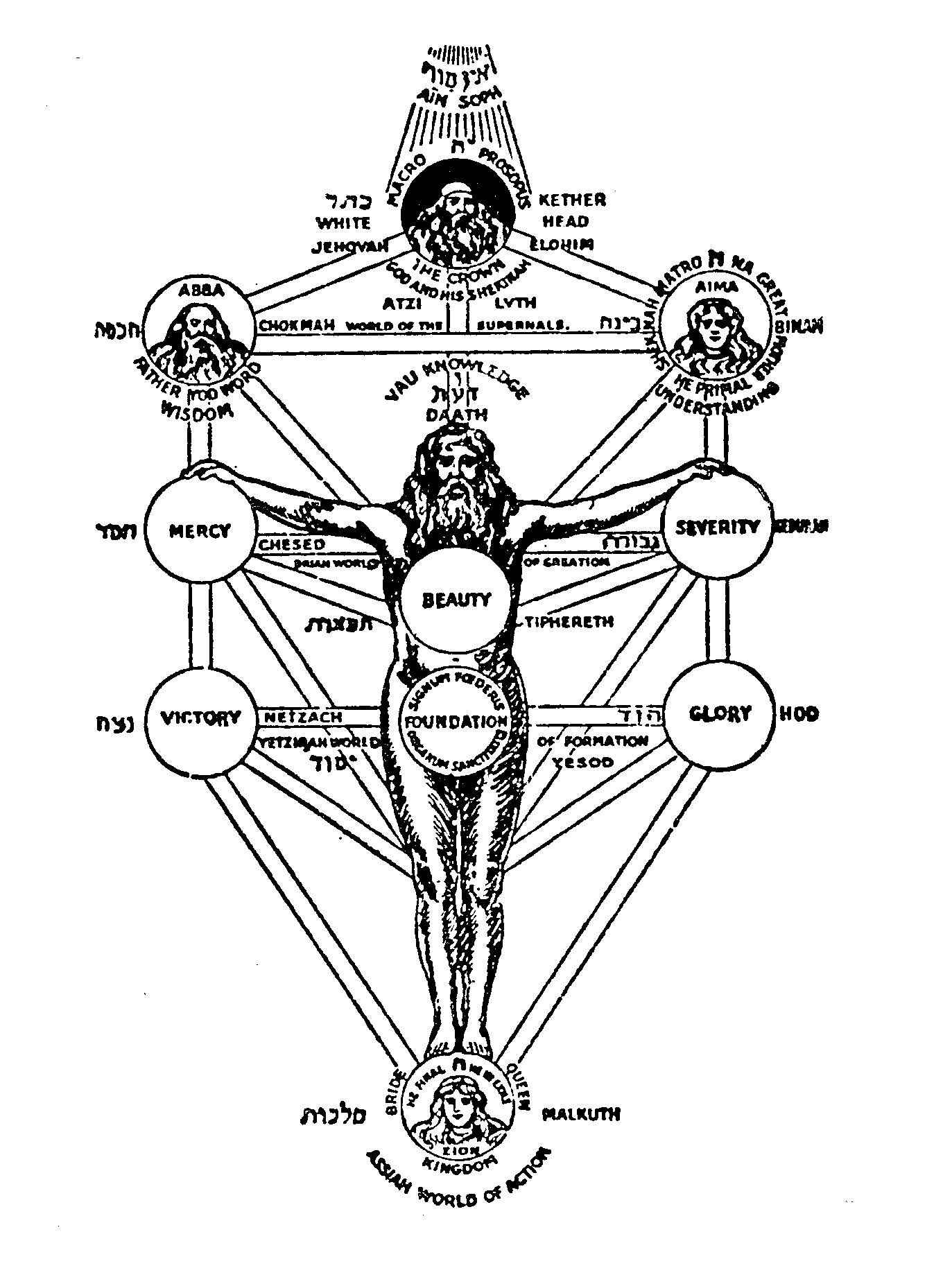 |
| The Tree of Life |
The other pool of sacred traditions which Christians must realize has had a deep effect on understanding scripture- and should continue to do so- is Hermeticism, Pythagoreanism and Platonism. All three have produced amazing minds like Marsilio Ficino, Origen, St. Clement of Alexandria, St. Dionysius the Areopagite, St. Augustine, St. Maximus the Confessor, and St. Bonaventura and many Sacred Sciences have developed out of them from: Alchemy, Astrology, Theurgy, Numerology, Sacred Geometry and pretty much all the ideas which we have discussed on this blog concerning Plato’s Ideas. One section in the New Testament which enigmatically suggests that Hermes Trimegistus (and his triune Sacred Sciences of alchemy, astrology and Theurgy) is relevant for interpreting the bible is Matthew 2 when the Three Magi from the East come to meet the new born, Jesus Christ- pay particular attention to the gifts the three of them give.
But these Ancient Greek traditions also had it's influence on something that's been profaned from the 'Enlightenment' onwards: The Liberal Arts. It shouldn’t be surprising that throughout Christian history, the 7 Liberal Arts which have supported piety for monks and nuns in monasteries and as well as produced the greatest minds, were seen as Sacred Sciences ( grammar, logic, rhetoric; arithmetic, geometry, music and cosmology). Utilizing these Sacred Sciences- with God’s grace- for reading and understanding scripture and its Three Books, will especially bring one to the depths of The Logos.
 |
| The 7 Liberal Arts ( Philosophy in the middle, Plato and Aristotle below Her and the 4 Gospel writers) |
I have offered hints, asked engaging questions and pointed in new directions in order get us to see scripture and its relationship to us and our surroundings differently. This is an invitation for fellow seekers, to be Wide-Eyed Travelers in this Story, this Play which taunts and teases with the suggestions of something more underneath the Masks around us, and on us: are we willing to see Jesus/God present with us at every moment? To be so radically loving towards one another that we become a Book for others to learn Wisdom from and which causes the Wisdom of the cosmos to open up to us? To do and see such things, we need Pure Hearts and the grace of God. It is not the amount of physical books read, but instead the Quality of one's Transparent Vision, which will allow one to Read and Hear. To be willing to confront scripture as a living and breathing presence and to confront Life as scripture’s Story whose leaves are dispersed in the universe, as Dante said, is to be willing to trust in the Mystery. The Story is still being written, but we all know, how it will end: The Two Books of Man and The Cosmos, will evaporate and Return to their Heavenly Essence, when the 7 Seals of that Heavenly Scroll, are broken .
“Behold, I am coming soon! Blessed is he who keeps the words of the prophecy in this book.” (Revelation 22: 21).


No comments:
Post a Comment