Let None Enter: An Introduction to the Beauty of Mathematics
When I was young, math never interested me one bit. Why in the world did I have to know the slope of a curve on a building and when in my life will I have to solve, “X”? This attitude stayed with me from 6th grade to my first semester in college, but it began to change when I began studying philosophy- particularly, Plato.
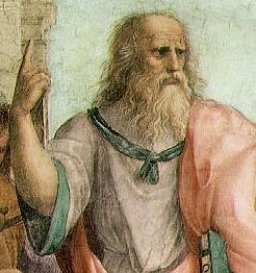
While reading Bryan Magee’s, “The Story of Philosophy”, I discovered one of Plato’s great sayings: “Let no one enter who is ignorant of mathematics”, which according to tradition, was said to hang above the entrance of his academy. At first I starred at those words in utter disgust over his elitism, but after considering his ideas on memory and metaphysics, it all made sense: We can all enter because we are all- according to Plato- born knowing the basic principles of mathematics. Plato in one of his dialogues- “Meno”- makes a random slave-boy solve a geometry problem and by leading the boy to the answer, demonstrates that through the course of solving the problem, the boy was slowly remembering what he already knew. As Plato says in The Republic, “Geometry aims at knowledge of the eternal”.

Even though much of what Plato believed was definitely influenced by the other great Greek Philosopher Pythagoras, it is possible that Pythagoras’s ideas on math and esoteric philosophy came from Babylon and Egypt. We know now that what middle-schools learn by him- namely- the Pythagorean Theorem, was much older than him: it was known not just in Babylon and Egypt, but also in China.
But this phenomenon of mathematical correlations between different cultures is more than and transcendent of linear historical causation. Even though it is now known that the math that Bertrand Russell and Alfred North Head in the 20th century were dealing with was already thought up by the 17th century German philosopher Leibniz- who claimed to have ‘discovered’ it in the Chinese esoteric text, “I- Ching”- it was already known by the Ancient Egyptians. And what makes these comparisons worthy of mention is that, these different cultures and individuals were dealing with the binary system: the system which is used by all modern computers.
It is a shame that the philosophy and history of mathematics is not taught in conjunction with applied mathematics because not only would it make math more interesting, but it would begin to press on people’s minds how beautiful reality is and how universal mathematics has always been. But because the math’s and sciences are only taught to show off to other countries how ‘intelligent’ there children are and in order to turn children into cogs in a machine so their country can compete in today’s global competition, I fail to believe that things will change. But it is my hope that through these series of blogs, I will not only increase your curiosity and interest in math by showing its universality, but by simultaneously showing how beautiful it is by frequently explaining it from the perspective of music, color, art, poetry, architecture, spiritually and metaphysics.
This introductory blog will lightly touch upon the metaphysical/ qualitative aspects of some numbers as well as expand on a couple inspirational quotations taken from numerous sources.
All are free to enter.
 |
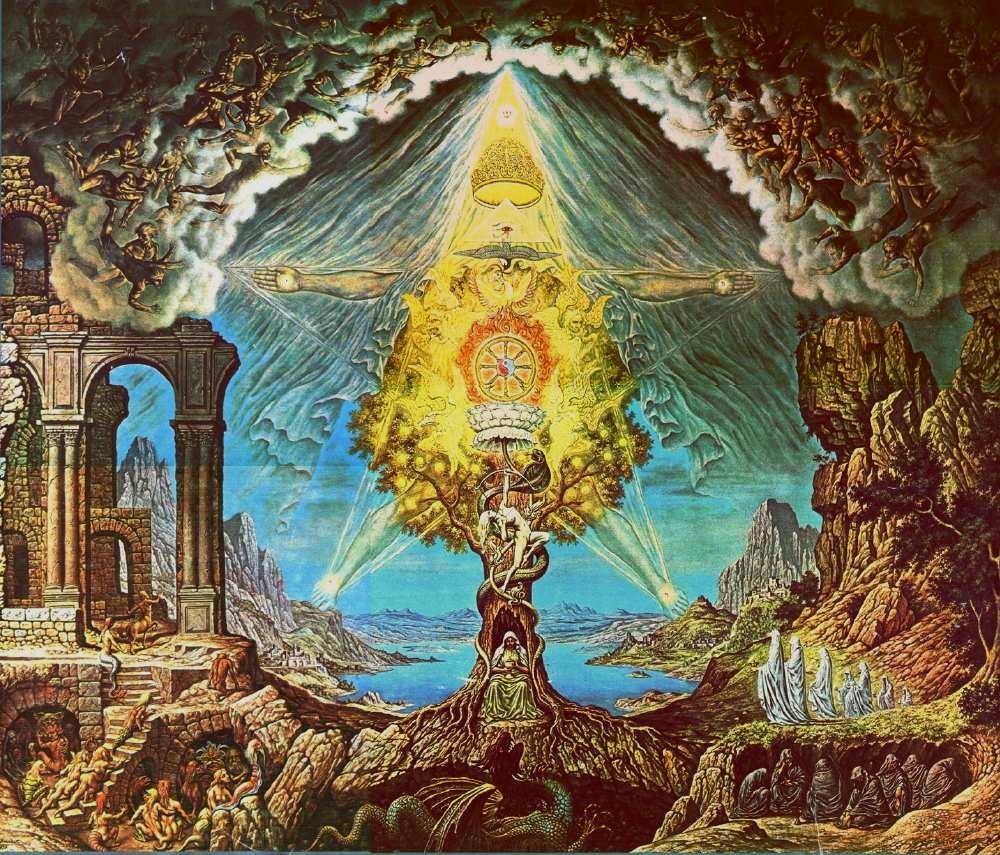
| Marcel Duchamp |
The Monad- as understood by Pythagoras and Leibniz- is the most central concept that must begin any investigation into mathematics because it is the seed from which grows all the numbers. The Monad is commonly understood as 1 but, this is literal and hence, a false interpretation. It is rather The One: That which is one it its form and content and yet completely transcends the Kantian/Space-Time concept of quantitative number. As the capital ‘O’ suggests, the symbol ‘1’ is as you’ve guessed, a symbol. But it is much more profound than that. It is not just a squiggly- line written on a piece of paper or a vibration in the throat, but it is a spiritual symbol of the primordial omnipresent Being from which all quantity is the offspring of. Every number is an incarnation of The Monad and everything you see, hear, taste, speak, read and touch is a communion with The Monad.
The Monad is the first, “Let there be…” that God commands for, it is the Androgynous Sophia (wisdom), the originator of all earthly forms and patterns. And as the numbers escape from the Platonic Cave of Sophia’s Womb, the existence of even and odd are manifested. Both are significant because, they stand as symbols for the sacred Anima (feminine) and Animus(Masculine) that ANIMAtes the universe.
 |
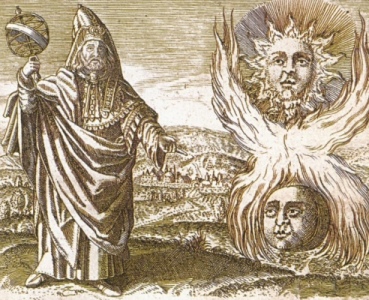
| "As Above, so Below and as Below, so Above"- Hermes Trismegistus |
Odd numbers are definite and masculine because whenever you divide an odd number, one must be odd and the other must be even- except of course for 1. Because the dividend and divisor- the first and last number divided- from an odd number must be either odd or even, it is seen as the union of Anima and Animus- yin and yang- and hence, is the symbol for The Monad. Even numbers on the other hand are feminine because, if an even number is divided into two equal parts, both must together be odd or even. This is significant for the fact that properties in the universe which are odd/Feminine- metaphorically, of course- are of a weaker constitution because they can only make outwardly manifest one nature and not another simultaneously. Even though an odd number is an incarnation of an even number, it is still slowly qualitatively speaking. Even numbered properties in the universe would be things such as rhythm and tempo in music, the artist who paints a painting, the space which is the essential support for all structures of life from trees to building, or the transcendent Truth-taken abstractly- from which all beauty is an incarnation of. All female properties would be the opposite pole of those fields: melody and rhyme, the canvas and paint, the physical tree or building as well as visible Beauty from which is the copy of Truth.
Being in tuned with the Masculine and Feminine aspects of reality while keeping in mind there numerical interpretations will make thinking or doing mathematics an aesthetic as well as a spiritual experience.
By appreciating the concepts I have so far explained, what is about to be shown will further elaborate on their main themes. Below is a brief list of esoteric/qualitative interpretations based on the numbers 1 through 10. These ideas come both from my own observations from studying religion and philosophy and from Manly P. Hall’s masterpiece, “The Secret Teachings of All Ages”- a book I highly recommend. One should also note that just because an even number is seen as feminine and an odd number as masculine, that does not disqualify the interpretations I gave above: they only been to add another layer of meaning. Enjoy.
A. Monad- 1
- Remains in the same condition(non-dual; mind during meditation)
- Hermaphrodism/androgynous (male and female)
- Odd and even (1+odd=even; 1+even=odd)
- God: Alpha and Omega(yet beginningless and endless)
- Plato’s Good(Plotinus’s One)
- Source and sustainer of matter: produces the duad(multiplicity)
- Substance and primary cause(Aristotle)
- Source of thoughts/symbols
- Apollo: The sun
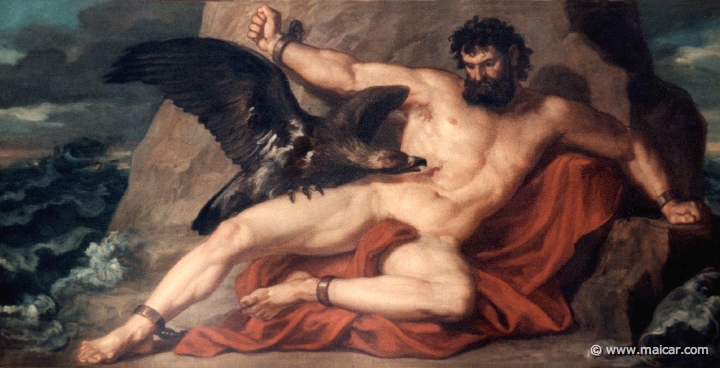
- Prometheus( brought light to humanity: light from Apollo/sun)
B. Duad- 2
- Division(duality: movability, indefiniteness, generation, opinion)
- Matter(evil in Gnosticism; darkness in Taoism)
- Marriage (of opposites: light/darkness, foreground/background, up/down,left/right,front/back, internal/external, ect.)
- ‘Audacity’: first number to separate itself from the Divine One.
- Mother: Mary, Isis, Erato, Diana, Venus, Juno, etc.
- Mother of ignorance and wisdom(use versus abuse)
- Reflection of Above(Maya; Plato’s forms; Prakriti;Yin)
C. Triad- 3
- First number(not one) that is odd
- Friendship, peace, justice and virtue(Pythagoras)
- Polyhymnia( a Greek Muse)
- Poseidon’s Triton
- 3 worlds of Plotinus
- 3 Guna’s(qualities) of Prakriti and the levels of evolution in Hinduism: Sattva(law, harmony, purity), Rajas(energy, passion, good/bad ambition) and Tamas(sloth, inertia, ignorance, insensitivity)
- Jesus: The Holy Trinity, 3 days before resurrection, 3 temptations by Satan, ect
- Buddha: tempted 3 temptations before ‘reaching’ enlightenment
- The Fates(Greek mythology: the white- robed incarnations of destiny which control the metaphorical Thread of life for every mortal from birth to death)
- Time and Wisdom(past, present and future: Wisdom organizes the present, foresees the future and benefits from the past)
- Music theory: the 3rd note in a triad- chord determines whether the chord is major(happy) or minor(sad)
- Triangle(Pythagorean right triangle; equilateral: Pyramid, shape of body in seated meditation; made up of Monad and Duad)
- 3 primary colors: Red, yellow and blue
D. Tetrad- 4
- 4 secondary colors: orange, green, indigo and violet
- God(1+2+3+4=Decad- see section on decad)
- Center of the week: Wednesday
- The Heart Chakra in Kundalini yoga(total is seven)
- 4 Nobel Truths of The Buddha
- 4 seasons
- 4 worlds in Kabbalah
- 4 Archangels(Christianity)
- The 4 fixed, mutual and cardinal Zodiacs(Astrology)
- Pythagorean/Kabbalistic Tetractys
- 4 physical elements(of 5): fire, water, air, earth(Aristotle; Alchemy)
- 4 writers of the Christian Gospels( related to the fixed Zodiacs in astrology)
 |
Herein contains layer upon layer of esoteric meanings:
The Pythagorean/Kabbalistic Tetractys. From this symbol,
one can understand the nature of color, music, the elements,
space, number and the cosmos.
|
E. Pentad- 5
- Union of 3 and 2(odd and even)
- 5 levels of the souls journey(Kabbalah)
- Pentagram(5- pointed star: Pythagoreanism)
- The 5th element: Ether( all in Ether and Ether in all)
- Equilibrium: divide the perfect #10 into two even parts(5)
- Nature: when it multiplies itself, returns to itself(5*5=25)
F. Hexad- 6
- Creation of the world(Clement of Alexandria)
- Perfection of all parts(Pythagoras)
- Marriage of 2 and 3
G. Heptad- 7(one of my favorite numbers)
- 7 days a week( 7th day=Sabbath)
- 7 planets(in classical astrology)
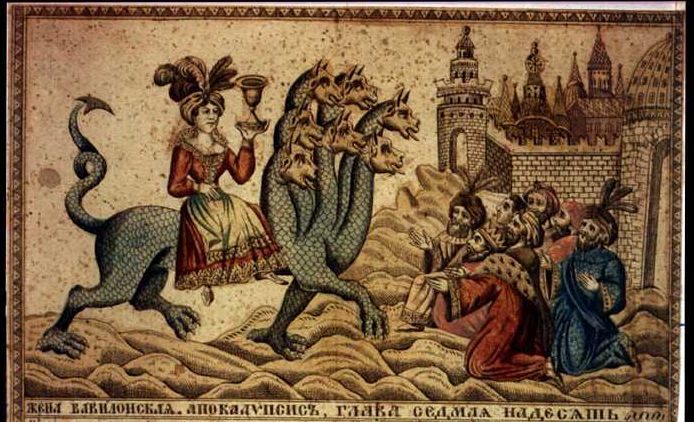
- 7 headed Beast in Revelation
- 7 Chakras(kundalini yoga)
- 7 notes in western music
- 7 colors( in most basic form)
- 7 directions: north, south, east, west, up, down and Center: “The center is the Father of the directions, the dimensions and the distances”( 220)
- Sevenfold spirits/lamps(Revelation)
- Mystic nature of The Human: 3-fold spiritual body + 4-fold physical body)
H. Ogdoad- 8
- 8 planets ( for now…)
- 8th ‘planet’ in classical astrology: the fixed stars
- The Ogdoad: eight Egyptian deities arranged in 4 male-female pairs)
- Only evenly- even number under 10
- 8- fold path of Buddhism
I. Ennead- 9
- first square of an odd number(32=9)
- # of Life(9 months- on average- in the womb)
- 9 heavens(Gnosticism)
- 9 orders/choirs of angels(Christianity)
- Evil(when 6 is turned upside down)
J. Decad- 10
- Greatest number( when adding all the ‘dots’ in the Pythagorean/Kabbalistic Tetrarch)
- 10 Sefirot’s (gates, utterances lights, channels, emanations, etc) of The Tree of Life in Kabbalah
- Omega(return to the Monad: 10)
- Atlas( carries the Numbers on his shoulders)
- Age, power, faith, memory and intelligence(Pythagoras)
 |
The Tree of Life in Judaic mysticism- i.e. Kabbalah.
Made up of 10 Sefirots, this symbolic diagram
shows the relationship between your
actions, emotions, thoughts,
the world and God.
|
This my friends is not knowledge or information that can be learned in school: this is the ancient and hidden wisdom which all esoteric societies old and modern contemplate which such careful attention. It is no wonder why Geometry, Music and Astronomy were part of the education of monks during the Middle Ages in Europe and why to this day, to become a Freemason, one must show proficiency in Geometry: to do so is to demonstrate one’s sensitivity to both concrete and abstract reality. It shows The Teacher that one has a solid foundation for learning more ‘weighty’ subjects.
The masses count, calculate and crunch numbers as they fly past their materialistic and zombie-like gaze. But the one who has his or her attention calm, open and curious will become open to the glories that lie within all numbers.
I recently read a wonderful book by Clifford A. Pickover called, “The Mathematics Devotional” which gives daily inspirational quotes from famous thinkers and supplements them with outstanding and sublime pictures. Because the wisdom that lies within them are too spectacular to miss, I will share a couple of them and give my own personal interpretations of them.
“Before creation, God did just pure mathematics. Then He thought it would be a pleasant change to do some applied.”- John Edensor Littlewood, “A Mathematicians Miscellany”
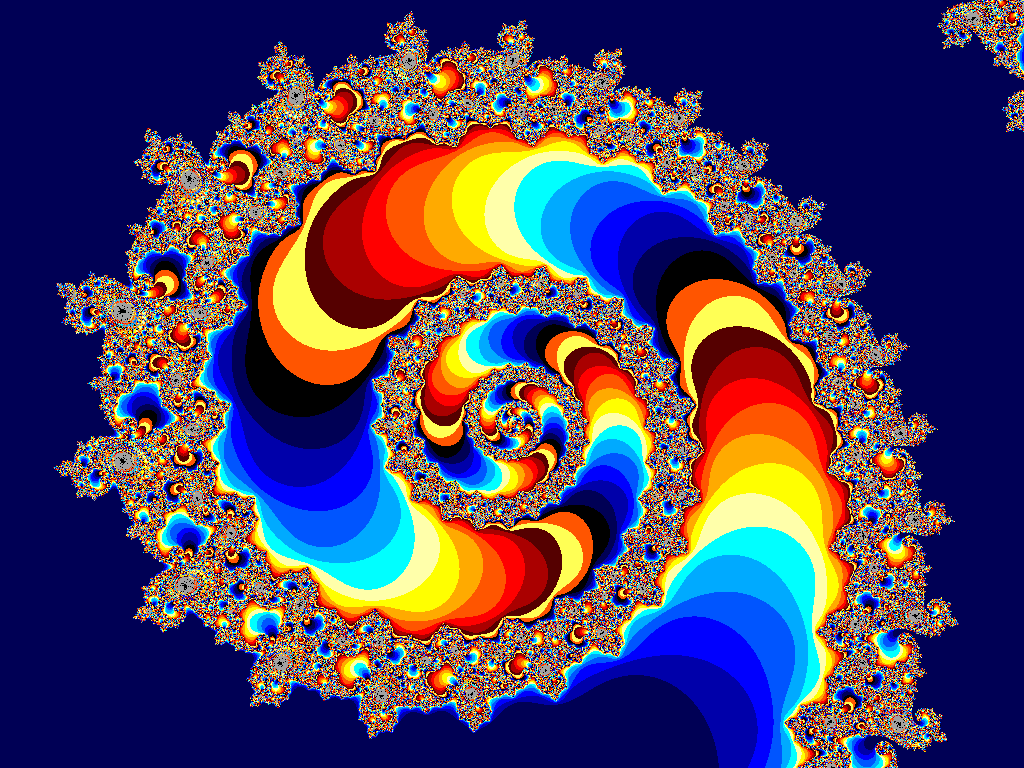
- According to Plotinus, there is a middle- world between God and physical reality which contains all the Ideas which support the universe. This world is not only the Intellect within the human being, but an emanation from God’s mind, whose forms are crystallizations of God’s ever- creative mind. Every movement in the universe is a mathematical cosmic dance which if one’s Ears hear well, can bring ecstasy.
 |
| Fractals |
“Music is the pleasure the human mind experiences from counting without being aware that it is”- Leibniz (letter)
- It is almost like the Kantian Categories of the mind is like a perpetual mathematical projector which when projecting the Platonic Forms/Ideas, is unconsciously counting: all the sensory information which travels up and down the nervous system, configuring all the complicated mathematical behaviors in the outside world most of the time we are not aware of it. We honestly don’t need to know math to listen to music or do make a film or create a painting or poem, but when we become aware of what determines are perceptions and the Forms which are based on all the phenomena we are conscious of, we more fully experience all those activities, allowing them to have a more spiritual resonance.
 |
The Golden Rectangle or Golden Ratio can be seen
not just in architecture, but in painting,
human anatomy, spiral galaxies,
tree branches, flower petals,
and DNA Molecules. |
“Mathematics and music, the most sharply, contrasted fields of scientific activity which can be found, and yet related, supporting each other, as if to show forth the secret connection which ties together all the activities of our mind and which leads us to surmise that the manifestations of the artists genius are but the unconscious expressions of a mysteriously acting rationally.”- Hermann Von Helmoltz (“Presentations and Speeches”- 1884)
- As I argued in a past blog, there is such a thing as qualitative and quantitative revelation: the first is discovery that takes place in science and the latter is the kind that the artist, painter, poet and musician does- namely, The Prophet. Because the former see’s the imagination from Poe’s perspective in his prose-poem, “Eureka” while the latter understands the imagination from William Blake’s, which is that The Poet is The Prophet, each are complimentary and are really just to aspects of the same Being, each supporting and dependent on each other. If this connection between the arts and the sciences, between the heart and mind, can be realized, we can began to pick-up the broken pieces of modern society.
 |
From "Practica Musicae", this work by the Italian Renaissance
music theorist Francinus Gafurius describes the Music of The Spheres.
This picture illustrates the 3 graces, 9 Muses ,9 planets and 4 elements with the
8 Greek modes of the diatonic/ C major Scale. The inscription
above Apollo reads: "The Apollian mind moves the Muses everywhere". |
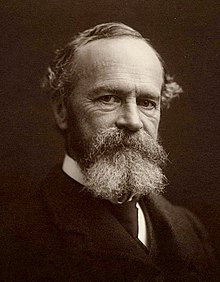
“The union of the mathematician with the poet, fervor with measure, passion with correctness, this surely is the ideal”-William James (“Collected Essays and Reviews”)
- As said above, the one goal that must be actualized.
“The pure mathematician is much more of an artist than a scientist. He does not simply measure the world. He invents complex and playful patterns without the least regard for their practical applicability”- Alan Watts (“Beyond Theology”-1964).
- I love this quote so much because it emphasizes the joy that is innately within the activity as well as with the forms involved. I don’t deny the scientist is an artist, but not as much as the pure mathematician: where as a scientist is merely one out of many colleagues in a group whose existence is kept alive my grants from a university, the pure mathematician is on his/her own: on their own with the shapes of the universe which beacon to be taken back into awareness.
This is where math will be kept alive: not by practical individuals who treat a number as pure quantityand as a means to an external end, but by individuals who both see and spread The Good News: The Eternal Quality from which quantity is both incarnation, incantation and celebration.
 |
| The Great Pythagoras |
Memories of past math tests still haunt me and sometimes I feel my private musing betray the real dread I had experienced when I was younger. The following phrase is said almost universally by those who suffer under our educational system: “I am just not good math”. But this ‘am’ needs critical investigation: who is this am? Is it whole or constituted of parts? More specifically, is this am something innate that was inherited by their parents or was it a blind-fold which through multiple failures and impatience, ever-more tightly gripped the sight of Sense from the persons self? It is the latter.
Because Plato argued that mathematics- or at least geometry- is innate, what really needs to be done is merely to retrace one’s memory. But I don’t want to make it sound like it is easy. Just like any memory, you cannot willingly bring back a memory into consciousness. As experience has shown me, trying to recover a memory can only be done when you let the mind alone, move on to another activity and wait for it to come on its own accord. Take meditation: when practicing to meditate for the first couple of weeks, even though the thoughts don’t go away when you are completely detached, if you pay attention to them, they begin to reveal more primordial memories not just in the personal unconscious, but in the collective. Perhaps that is how the Buddha was able to remember all of his past lives.

With both patience, playfulness and God’s grace, you too can become that pure mathematician that contemplates the geometric Forms. And as I will dedicate my time to enumerating as many mathematical topics as I can, I hope that I can be your source of guidance and curiosity on your path to The Monad.
All are free to enter, but none to leave: how can you enter what you never left?